
About this Event
250 Hutchison Rd, Rochester, NY 14620
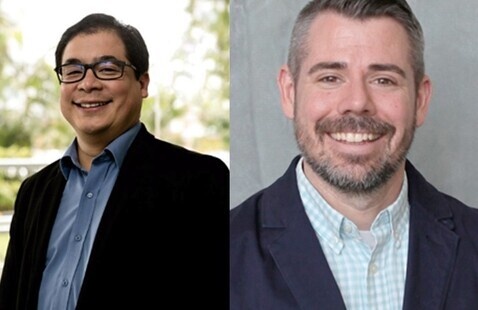
Interested in getting involved in research on campus? Join the Goergen Institute for Data Science and Artificial Intelligence (GIDS-AI) for a research symposium featuring GIDS-AI affiliated faculty members Benjamín Castañeda and Sean Crowell. Both faculty will highlight their work and share opportunities for GIDS-AI students and faculty to collaborate.
About the Research Talks:
Benjamin Castañeda: AI-enabled Point-Of-Care Ultrasound Devices for Non-Experts
Ultrasound is one of the most accessible and versatile medical imaging technologies; however, its broader adoption remains limited by its strong dependence on trained operators and expert interpretation. This talk will explore how artificial intelligence can help overcome these barriers and enable new models for delivering medical imaging. The presentation will introduce Volume Sweep Imaging (VSI), an ultrasound approach that enables operators with minimal training to acquire clinically useful images using simple protocols based on external body landmarks. Drawing from the deployment of VSI in underserved communities in Peru, the talk will examine how AI can support image acquisition, identify anatomical structures and abnormalities, assist image interpretation, and enable the extraction of quantitative imaging biomarkers. Applications in obstetrics, breast imaging, lung imaging, and liver disease will illustrate both the potential and the challenges of developing AI-enabled ultrasound systems. Finally, the presentation will discuss how the integration of AI with simplified ultrasound acquisition can reduce expand access to diagnostic imaging in outpatient settings and underserved communities.
Sean Crowell: Machine Learning for Greenhouse Gas Remote Sensing Research
Remote sensing of greenhouse gases is a primary data source for understanding the natural carbon cycle (e.g., ecosystems and oceans) as well as anthropogenic emissions from energy, waste, and agriculture/land use. Utilizing remote sensing data is challenging due to (1) complex physics-based models and (2) under constrained inverse problems. The record of carbon dioxide and methane from space is now sufficiently long that we can apply machine learning techniques to process and interpret the raw signals we beam down from space. In this talk I will discuss the typical physics-based models used for interpreting remote sensing data and give some examples of how machine learning methods are being used to improve the inference process in terms of both accuracy and efficiency. I will also give some examples of how my lab partners with data science practitioners to do high impact, interdisciplinary work.
About the Researchers:

Benjamin Castañeda, Ph.D., is a Professor of Biomedical Engineering at the University of Rochester, with secondary appointments in Electrical & Computer Engineering and Imaging Sciences, and an affiliated faculty member of the Goergen Institute for Data Science and Artificial Intelligence. Prior to joining the University of Rochester, he was a Professor at Pontificia Universidad Católica del Perú, where he founded the Medical Imaging Laboratory and the undergraduate program in Biomedical Engineering. His work has contributed to the development and clinical deployment of technologies aimed at expanding access to healthcare, including Volume Sweep Imaging for tele-ultrasound in underserved communities of Peru and the MASI mechanical ventilator developed during the COVID-19 pandemic. His contributions to medical technology innovation have been recognized through distinctions including the Academic Innovator Award from Peru’s national science and technology system and the Peruvian Best Patent Award. His current research explores the integration of AI, quantitative ultrasound, and simplified imaging protocols to make ultrasound diagnostic imaging more accessible and effective across diverse healthcare settings.

Dr. Sean Crowell employs instruments and models to improve scientific understanding the exchange of carbon between the land, ocean, and atmosphere. More specifically, he uses in situ and space-based observations in concert with atmospheric models and machine learning emulators to retrieve actionable scientific information from satellite remote sensing data in order to constrain surface fluxes and additionally attributes those fluxes to different carbon cycle processes. He was formerly the Deputy Principal Investigator and Project Scientist for the Geostationary Carbon Observatory (GeoCarb) mission, a geostationary carbon gas imaging satellite. He is a member of the Orbiting Carbon Observatory-2/3 and ASCENDS science teams and works with international institutions on development of observations and models to improve our understanding of the carbon cycle.

+ 3 People interested in event
User Activity
No recent activity